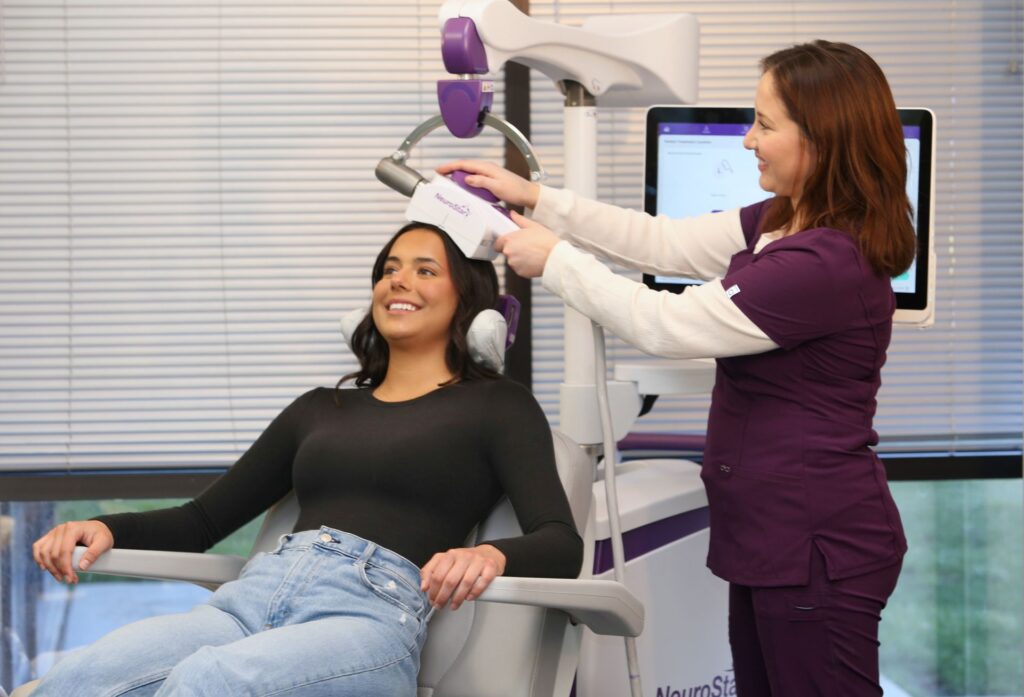
FDA-cleared, non-invasive, medication-free treatment for depression (including depression with anxiety) and OCD, with personal care close to home in Cos Cob.
A vast majority of commercial and Medicare plans recognize the effectiveness of TMS Therapy for depression and now include it in their coverage. Coverage and eligibility may vary, so we’ll verify your benefits before your first appointment.
No surprises: we’ll walk you through your benefits and next steps before you begin.
Out-of-network insurance benefits may apply. We help obtain prior authorization for TMS treatment, and some patients receive partial or full reimbursement depending on their plan.
Talk with our team to find out if NeuroStar® TMS is right for you.
If you’re struggling with depression that hasn’t improved with medication, you’re not alone, and there is hope. Founded by Jill Vaughan Tesei, APRN, TMS Greenwich offers FDA-cleared NeuroStar® Transcranial Magnetic Stimulation (TMS), a non-invasive, drug-free treatment that helps activate areas of the brain linked to mood. Jill also specializes in composite treatment: combining two or more therapies, such as NeuroStar® TMS and medication management, into one personalized plan for depression that has not responded to standard care. With therapy also offered by our providers, your care is all under one roof.
To offer a safe, effective alternative for people who haven’t found relief through traditional treatments, with compassionate, personalized care.
People living with depression often show reduced activity in areas of the brain that regulate mood, including the prefrontal cortex. NeuroStar® delivers highly targeted magnetic pulses to these areas, gently stimulating the nerve cells involved in mood regulation to improve symptoms of depression.
NeuroStar® TMS is often chosen by people with treatment-resistant depression who have not found lasting relief from medication alone. Sessions take 19 to 37 minutes, you stay awake, and you can drive yourself home.
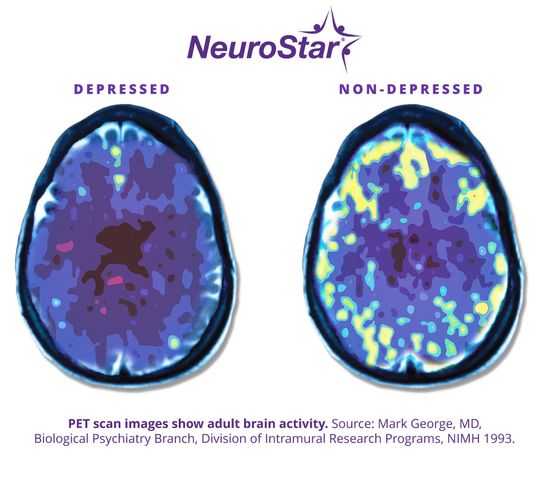
PET scan images courtesy of Mark George, M.D., NIMH, 1993. They show brain activity in a depressed versus non-depressed brain and are not scans from TMS patients.
Free
Not sure if TMS is right for you? Take the TMS self-assessment

We combine NeuroStar® technology with personalized care to help you find lasting relief from depression. Our practice is led by experienced mental health professionals dedicated to a compassionate, patient-centered approach every step of the way.
Our clinicians are specially trained and certified in NeuroStar® TMS therapy.
We take time to understand your experience with depression and tailor treatment to you.
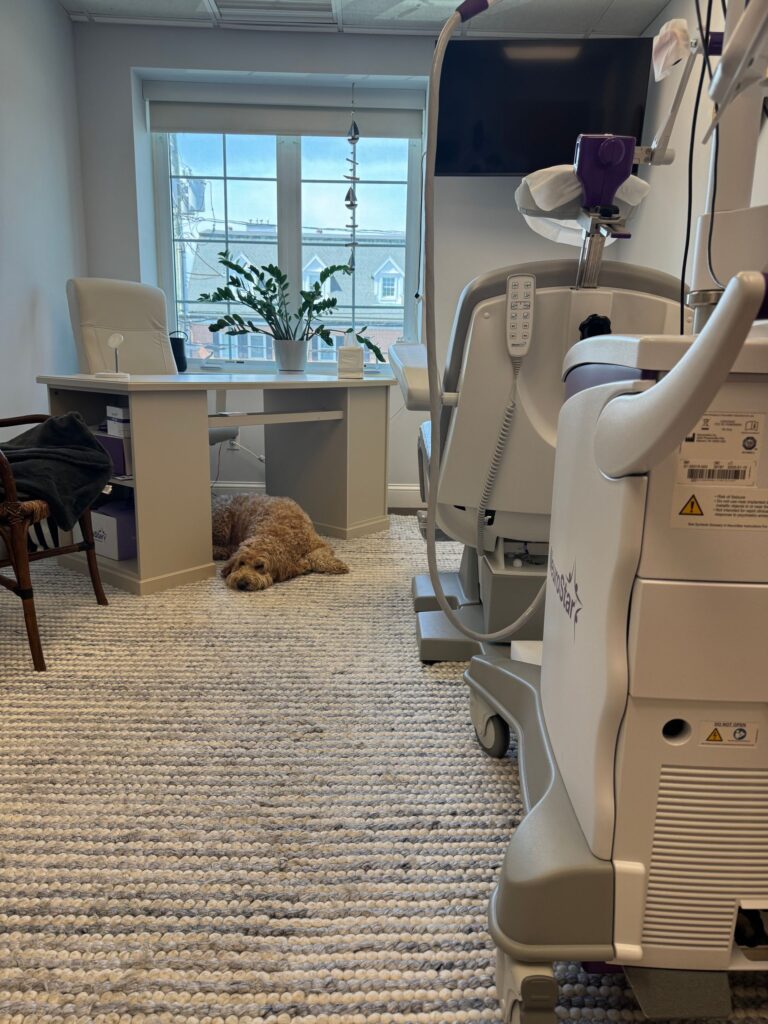
Our office is designed to feel welcoming and calm, not clinical or overwhelming.
We verify insurance, guide you through treatment and track your progress closely.
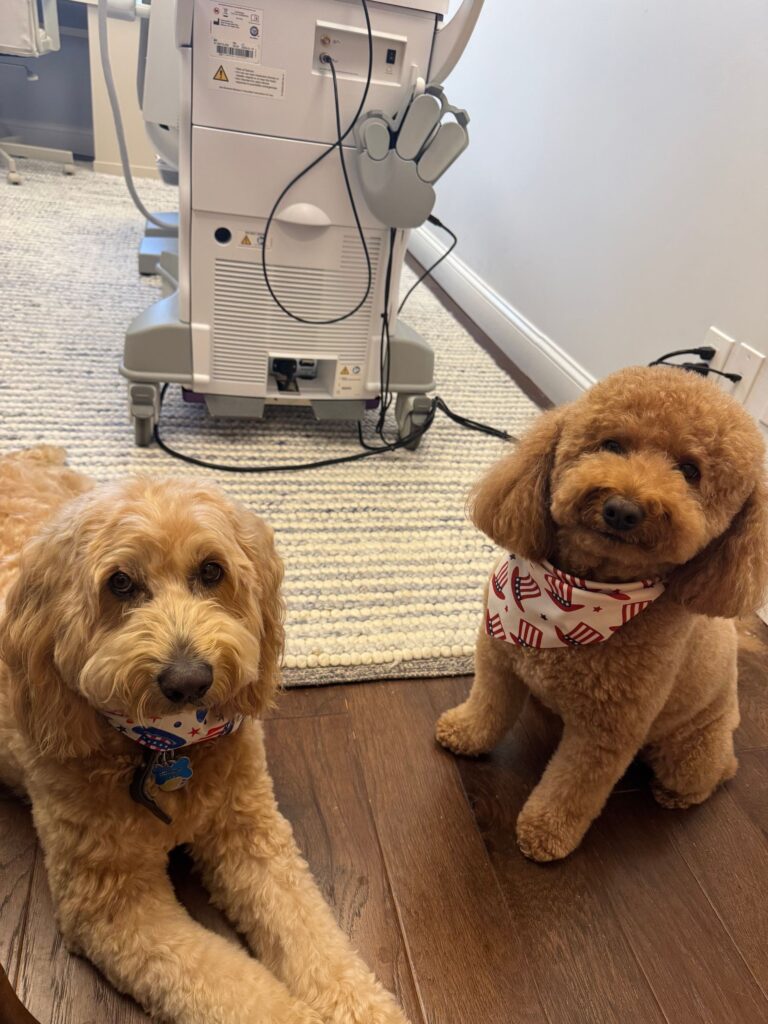
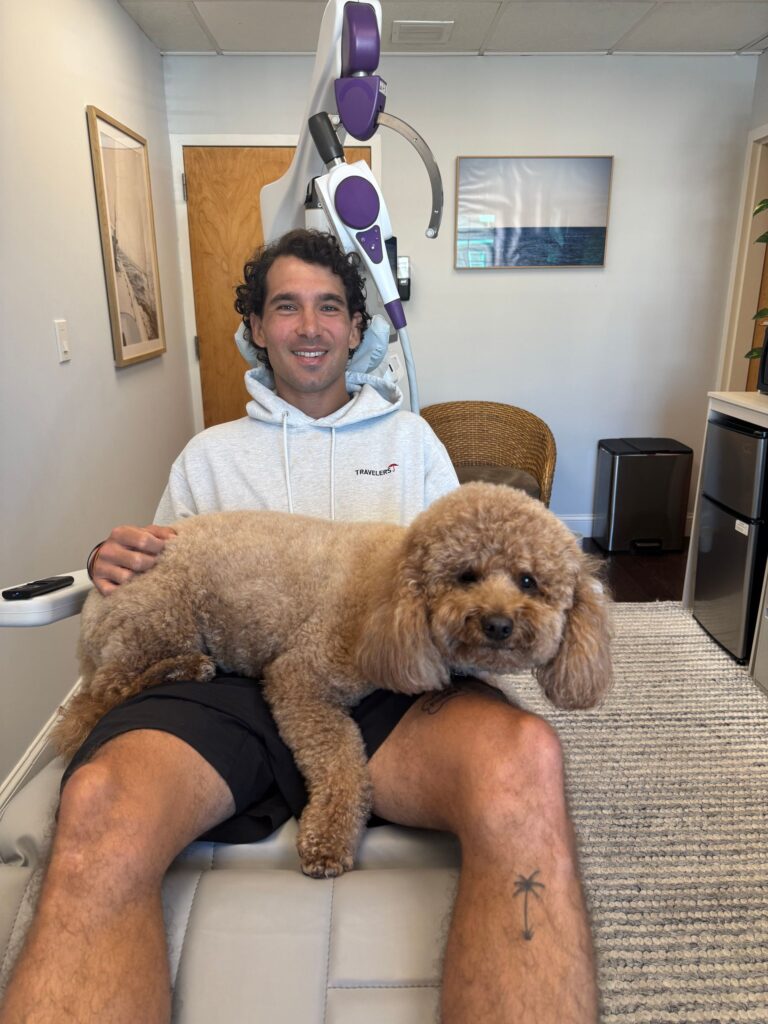
Our in-office therapy dogs offer quiet companionship and comfort during sessions.
Jill is a board-certified Family Psychiatric Nurse Practitioner with advanced training in child, adolescent and adult mental health. A Yale University graduate, she also holds Master’s degrees in Clinical Mental Health Counseling and Expressive Arts Therapies from Lesley University.
With over 20 years of experience in psychiatric care, including inpatient, emergency and private practice settings, Jill specializes in anxiety-related disorders. She completed specialized training in psychopharmacology, Cognitive Behavioral Therapy and Behavioral Parent Training through the Yale Child Study Center, and furthered her CBT expertise at the Beck Institute. Jill is a clinical professor at the Yale University School of Nursing and brings a compassionate, evidence-based approach to TMS therapy, helping patients who haven’t found success with traditional treatments find relief through NeuroStar® TMS.

Family Psychiatric Nurse Practitioner (APRN).
Graduate and clinical professor at the Yale School of Nursing.
Of experience across inpatient, emergency and private practice care.
Psychopharmacology and CBT through the Yale Child Study Center and Beck Institute.
A short online questionnaire helps you reflect on your symptoms.
Talk with our team about your history and questions. No obligation.
We check your insurance coverage before your first appointment.
Daily sessions in our calm Cos Cob office, with progress tracked closely.

Find out if NeuroStar® TMS Therapy is right for you. Schedule your free discovery call. No obligation, just answers.
Transcranial Magnetic Stimulation (TMS) is a non-invasive treatment that uses magnetic pulses to stimulate areas of the brain known to be underactive in people with depression.
No. NeuroStar® TMS is not electroconvulsive therapy (ECT). It does not require sedation or cause memory loss, and most patients drive themselves to and from sessions.
A typical initial course of treatment is about 19 to 37 minutes daily over 4 to 6 weeks.
A vast majority of commercial and Medicare plans now cover TMS Therapy for depression. Coverage varies by plan, and we verify your benefits before you begin.
TMS does not circulate in the blood, so it avoids side effects like weight gain, nausea or sedation. The most common side effects reported in clinical trials were headache and scalp discomfort, generally mild to moderate and less frequent after the first week.
Dedicated to helping you feel like you again with FDA-cleared NeuroStar® TMS Therapy in a calm, private Cos Cob office.
Copyright © 2026 TMS Greenwich. All rights reserved. Individual results may vary.
The NeuroStar Advanced Therapy System is indicated for the treatment of depressive episodes and for decreasing anxiety symptoms for those who may exhibit comorbid anxiety symptoms in adult patients suffering from Major Depressive Disorder (MDD) and who failed to achieve satisfactory improvement from previous antidepressant medication treatment in the current episode.
The NeuroStar Advanced Therapy System is intended to be used as an adjunct for the treatment of adult patients suffering from Obsessive Compulsive Disorder (OCD).
NeuroStar Advanced Therapy is indicated as an adjunct for the treatment of Major Depressive Disorder (MDD) in adolescent patients (15-21).
NeuroStar Advanced Therapy is only available by prescription. A doctor can help decide if NeuroStar Advanced Therapy is right for you. Patients’ results may vary.
The most common side effect is pain or discomfort at or near the treatment site. These events are transient; they occur during the TMS treatment course and do not occur for most patients after the first week of treatment. There is a rare risk of seizure associated with the use of TMS therapy (<0.1% per patient).
Visit neurostar.com for full safety and prescribing information.
Sackeim 2020 (NeuroStar Outcomes Registry): 83% and 62% are clinician-rated CGI-S results, patient-rated rates were lower. Dunner 2014: 12-month follow-up with continued medication and TMS retreatment available. Individual results may vary.