
NeuroStar® uses transcranial magnetic stimulation (TMS) to stimulate specific areas of the brain that are underactive in people with depression. Unlike electroconvulsive therapy (ECT), TMS is non-invasive and does not require anesthesia or cause memory loss. It is FDA-cleared for depression, anxious depression and OCD.
Sessions take place in our office while you sit comfortably and stay awake.
No anesthesia and no effect on alertness, so you can drive yourself to and from sessions.
TMS does not circulate in the blood, so it avoids side effects like weight gain, nausea or sedation.
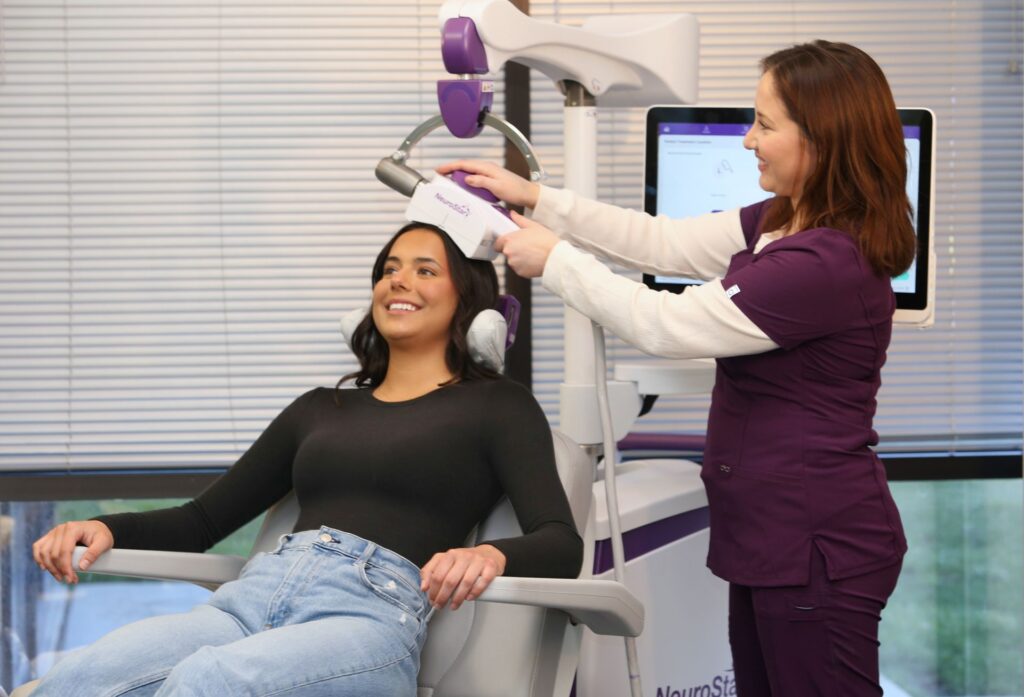
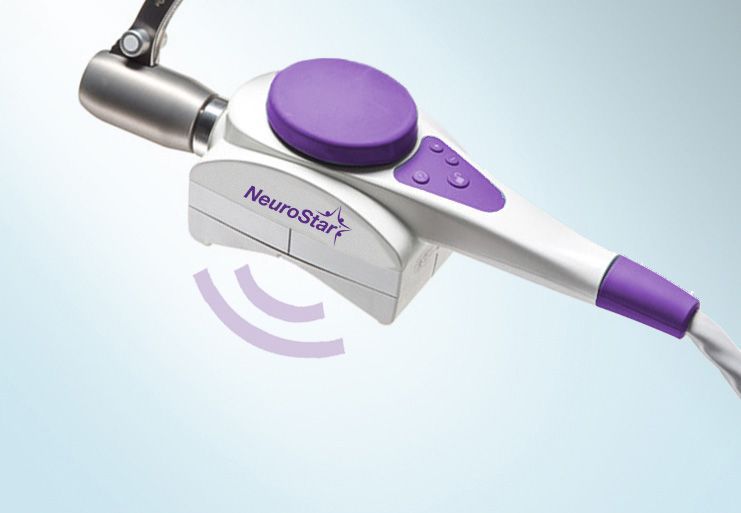
You’re seated comfortably in the treatment chair, and a small, curved magnetic coil is gently positioned on your head.
NeuroStar delivers targeted magnetic pulses to areas of the brain that regulate mood. You’ll hear a clicking sound and feel a light tapping.
Each session lasts 19 to 37 minutes. There’s no effect on alertness or memory, so you can return to your day right away.
A typical initial course is one session a day, five days a week, with progress tracked closely.
People living with depression often show reduced activity in areas of the brain that regulate mood, including the prefrontal cortex. NeuroStar delivers highly targeted magnetic pulses to these areas to stimulate nerve cells and improve symptoms. Watch how it works.
Sources: Sackeim HA, et al. J Affect Disord. 2020;277:65-74 (NeuroStar Outcomes Registry; 83% and 62% are clinician-rated CGI-S results, patient-rated rates were lower). Dunner DL, et al. J Clin Psychiatry. 2014;75(12):1394-1401 (12-month follow-up with continued medication and TMS retreatment available). Individual results may vary. See all research.

When appropriate, medication can be part of a comprehensive care plan. We offer careful, collaborative medication management for adolescents and adults, whether you’re starting treatment, adjusting a current plan, or combining medication with NeuroStar® TMS.
Led by board-certified psychiatric nurse practitioners with Yale training in psychopharmacology.
An optional cheek-swab test that shows how your genetics may affect your response to medications.
Treatment is shaped around your age, symptoms and goals, and reviewed together over time.
Medication support can be combined with NeuroStar® TMS when it’s the right fit.
Jill Vaughan Tesei, APRN and Maryellen Pachler Kennell, APRN bring decades of combined psychiatric experience and Yale training to your care.
A vast majority of commercial and Medicare plans now include TMS Therapy for depression. Coverage and eligibility vary by plan and by service, so we verify your benefits before your first appointment. Questions? Call 203.769.1365.
TMS is a noninvasive procedure that uses magnetic fields to stimulate nerve cells in the brain to improve symptoms of depression. It is typically used when antidepressant medications haven’t been effective, have stopped working, or as an alternative to medication.
A typical initial course of treatment is about 19 to 37 minutes daily over 4 to 6 weeks.
A vast majority of commercial and Medicare plans have recognized the effectiveness of treating depression with TMS Therapy and now cover it. We verify your benefits before you begin.
TMS does not circulate in the blood, so it does not have side effects like weight gain, sexual dysfunction, nausea, dry mouth or sedation. The most common side effects in clinical trials were headache and scalp discomfort, generally mild to moderate and less frequent after the first week.
No. TMS uses pulsed magnetic fields similar in intensity to an MRI. This differs from low-intensity static magnets, which deliver weak, undirected fields that are not capable of activating brain cells.
Dedicated to helping you feel like you again with FDA-cleared NeuroStar® TMS Therapy in a calm, private Cos Cob office.
Copyright © 2026 TMS Greenwich. All rights reserved. Individual results may vary.
Sackeim 2020 (NeuroStar Outcomes Registry): 83% and 62% are clinician-rated CGI-S results, patient-rated rates were lower. Dunner 2014: 12-month follow-up with continued medication and TMS retreatment available. Individual results may vary.
